Any genealogy that intertwines historical, mythological, and religious figures can shape identity and a sense of belonging for members of that family. This intertwining of various figures and narratives is not just about tracing lineage; it’s about crafting a familial context that gives depth and meaning to that family’s place in the world. When a family traces its roots back to significant figures –historical leaders, mythological heroes, or revered religious personalities– it does more than establish a pedigree. It weaves the family’s narrative into the broader tapestry of human history and culture. Such connections build continuity, linking the present to the past. They become part of a legacy that stretches beyond the mundane details of everyday life, connecting them to grand, sweeping narratives of history and lore.
Moreover, these connections to mythological and religious figures often carry rich stories that embody specific values, virtues, and lessons. Being associated with these narratives allows family members to inherit not just a name but also a set of ideals and moral guidelines. It’s a way of inheriting and perpetuating a cultural and ethical legacy. Additionally, knowing one’s genealogical story can provide a sense of rootedness and stability in a world where identities can feel fragmented. It can be particularly empowering in a psychological sense, giving individuals a framework within which to understand their own experiences and challenges. Through experiencing themselves as part of a lineage that has faced and overcome its own trials, family members can find inspiration and strength. In this sense, the genealogies that connect the Boone lineage to ancient ancestors serve a social function in that they include historical, mythological, and religious figures that may function as a narrative platform that nuances Boone history with meaning, connects individuals to larger stories, and serves as a source of cultural, moral, and social identity.
Real vs. True
As with every ancient genealogical source, they are real even as they may be a reflection of sociocultural lore. The ancient gemological lineages that trace royalty to Biblical and mythical figures of primordial times are, nevertheless, very real. In one of the ways those ancient genealogies are real, much of our world history is defined by those very genealogies. Historical rulers had power tied to these genealogies. However, in a more tangible sense, those genealogies reflect a scientific reality: statistically, it’s likely that every person living today shares a common ancestor if you go back even 1000 years.
Every person has two parents, four grandparents, eight great-grandparents, and so on. The number of OUR ancestors doubles with each generation. If we assume an average generation is 30 years, 1,000 years equals about 33 generations. Therefore:
- At 10 generations (300 years ago), we have 1,024 ancestors.
- At 20 generations (600 years ago), we have over 1 million ancestors.
- At 33 generations (1,000 years ago), the math says we should have over 8.5 billion ancestors.
But there is just one problem: 1,000 years ago, the total population of the Earth was only about 250 to 300 million people. Researchers at Yale University demonstrated that if you go back about 1,000 to 1,500 years, you reach a point where the population of a given region is divided into two distinct groups:
- People who left no descendants alive today because their lines died out.
- People who are common ancestors to everyone alive today in that region.
There is no middle ground. If an English peasant, a French baker, or a Viking king living in the year 1000 CE has any living descendants today, they are an ancestor to every single person of European descent alive today. If you go back slightly further to about 2,000 or 3,000 years, this applies globally. You are directly descended from anyone who lived in the year 1000 BCE in Asia, Africa, or the Americas, provided their lineage survived.
In other words, as the Yellow Emperor lived more than 4,600 years ago, there is a 100% scientific probability that he is your ancestor. While the genealogy linking William Boone to the Yellow Emperor is likely more lore than fact, it, nevertheless, attests to the demonstrable reality that every Boone is an ancestor of China’s Yellow Emperor. Likewise, Musa ibn Nusayr, born around the year 640 CE, was the Governor of Ifriqiya and al-Andalus. While the Boone genealogical lineage tracing William Boone’s ancestors back to him may, in fact, be a reflection of sociocultural lore, it is nevertheless a scientific certainty that Musa ibn Nusayr is William’s ancestor.
This means that regardless of the lore one might encounter in the genealogical record, it is a 100% certainty that Musa ibn Nusayr (born ~640 CE) is somewhere around my (and your) 44th to 53rd great-grandfather, and the Yellow Emperor (reigned ~2600 BCE) is somewhere around my 150th to 180th great-grandfather, depending on whether we were to trace the lineage back from Martha Midlin or William Boone.
Recent Truths
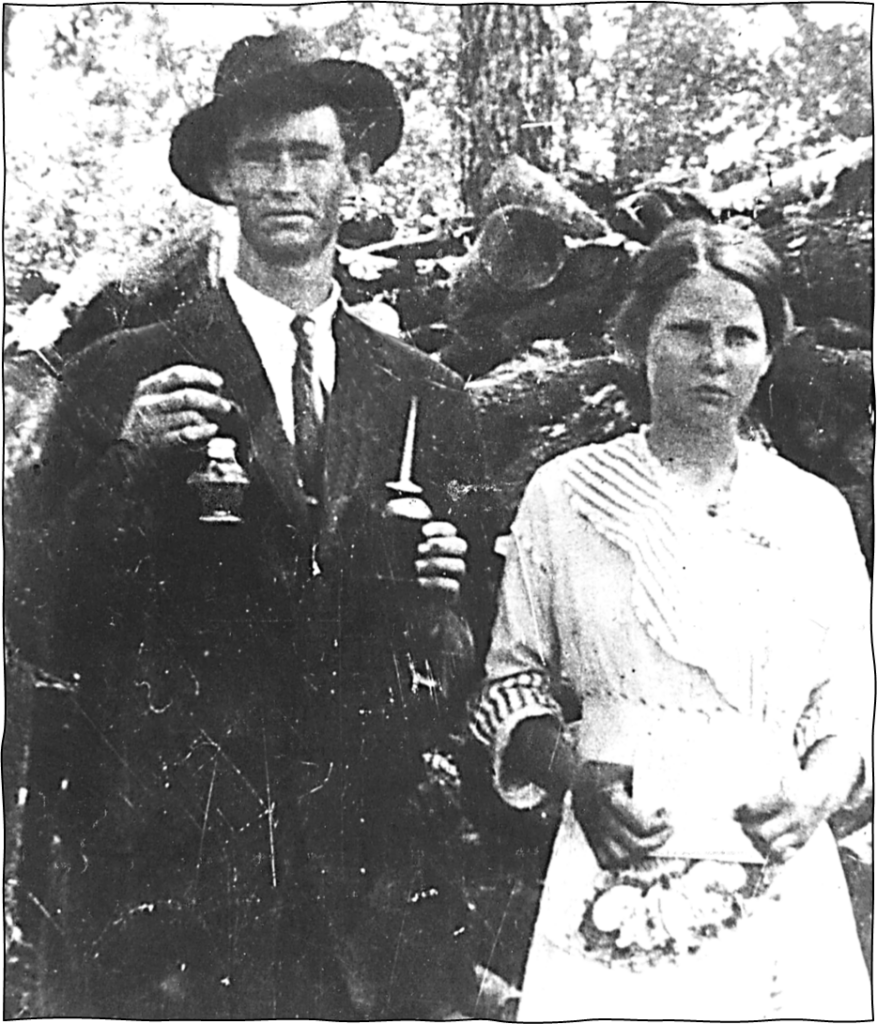
While the genealogical lineages tracing William Boone’s ancient ancestry can speak to a familial realities, my interest in genealogy began with simply wanting to know about just 3 people:
- John “Johnny” Layfette Franklin Boone ; his father,
- John W. T. “Lefet” Boone; and, his wife,
- Martha Midlin.
I grew up listening to both my grandmother, Hazel Boone, and her daughter, my mother, tell me about Johnny Layfette Boone, and his mother and father. I knew they had a hard life. I knew the story was wrapped up in the murder of Johnny Layfette’s father, the disappearance of his mother, Indian Territory, kidnapping, and a very hard life for Johnny Layfette and his wife, Eva Gipson.
I began researching this history in 2014. I am now putting together this website in 2026. It has taken this long to feel as though I now have a fairly comprehensive understanding of the incredibly painful, and yet meaningful histories of these three people.
Navigation
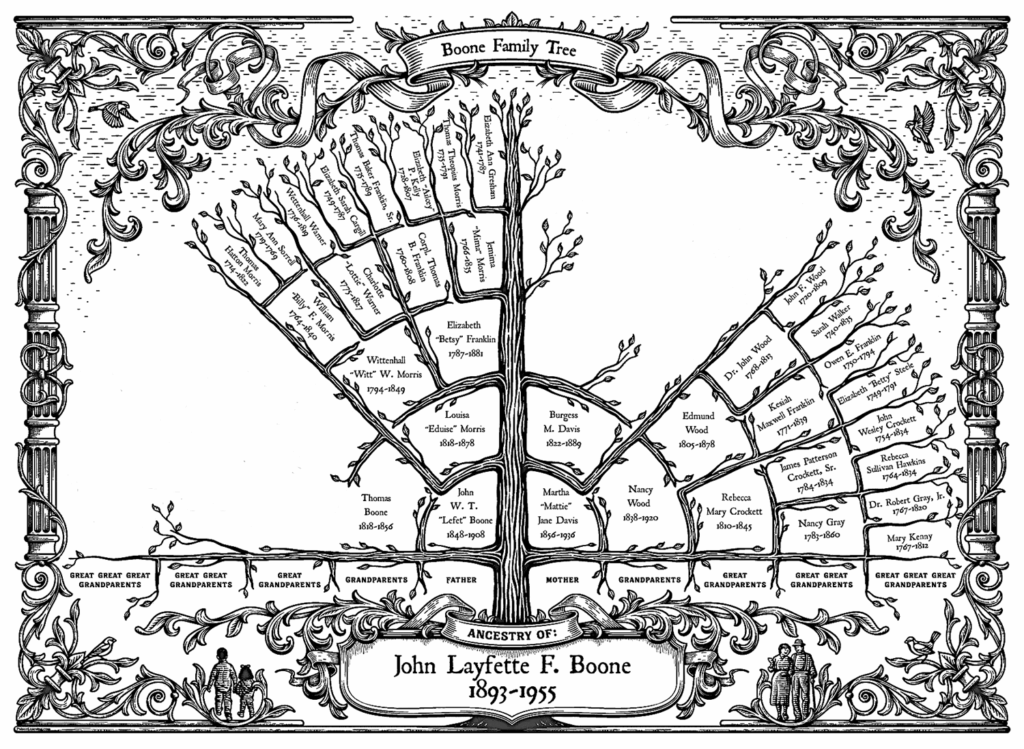
This site is divided into two areas: 1.) The ancient ancestral lineages of Johnny Layfette Franklin; and, 2.) The biographical histories of Johnny Layfette Franklin and his parents.
The front page focuses on ancient ancestral lineages and uses a browser specifically made for this project, which is available to everyone on the internet.
The biographical histories of Johnny Layfette Franklin and his parents are password-protected. The password is only known to me, my family members, and the members of Brenda’s Boone Facebook group, as these biographies and genealogies contain sensitive information.
What about a Book?
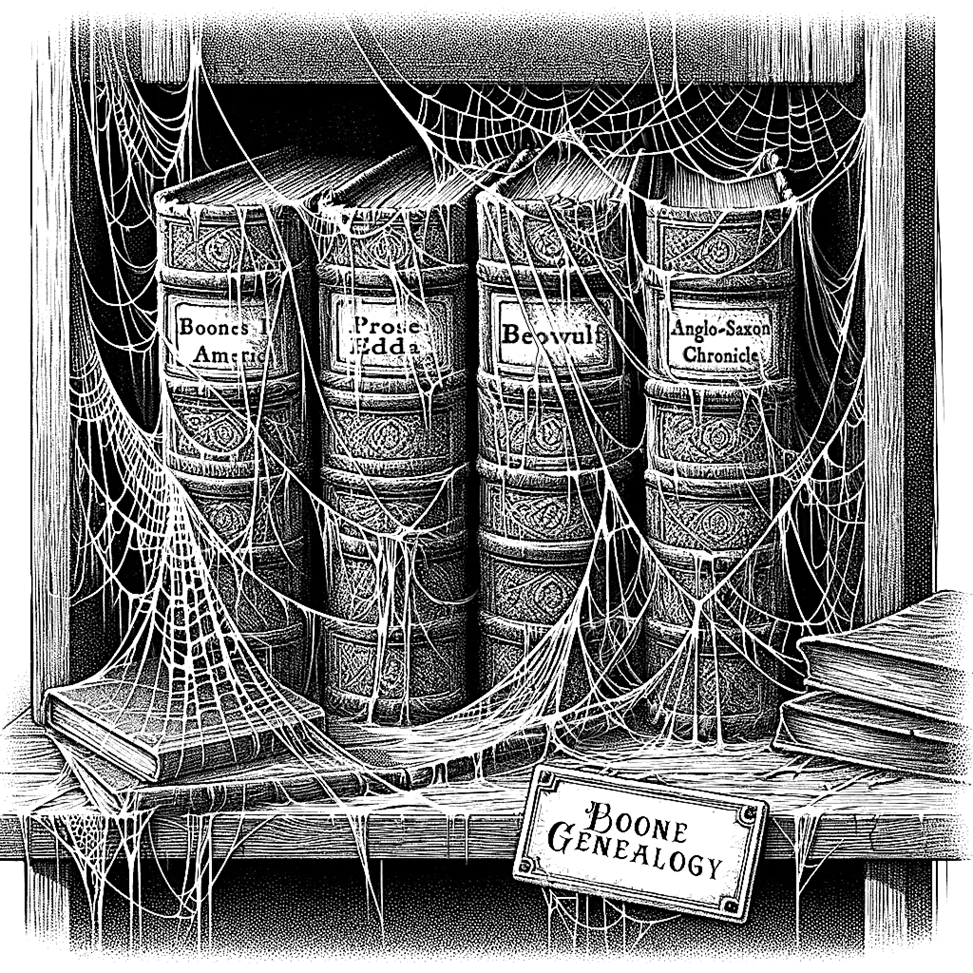
The contents of this website will be made available as a password-protected ebook download or as a print book that you can order, though getting such a print book put together is a secondary goal, to help pull my research together and make it freely available online to those who may be interested. So, you can probably expect to have access to all of this in book form by 2027.
Who am I?
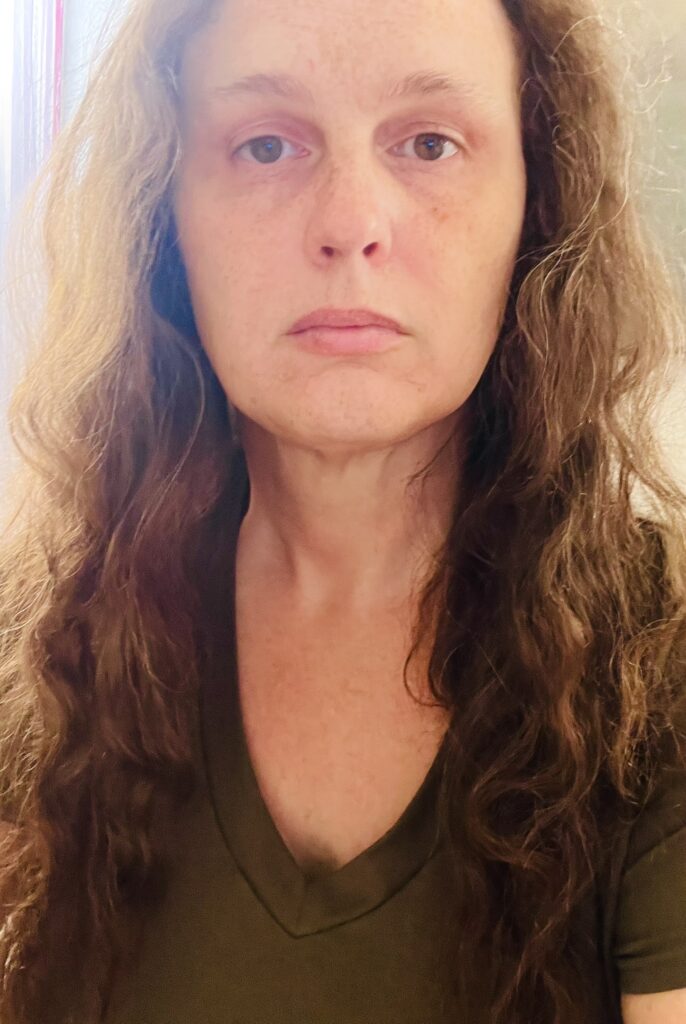
My name is Cristan Williams, and this is my genealogy research site. Johnny Layfette Franklin is my great-grandfather.